


RDT Ross Droplet Technique
What is RDT in Coffee?
In the world of specialty coffee, particularly espresso preparation, RDT stands for the Ross Droplet Technique. It’s a simple grinding hack that involves lightly misting roasted coffee beans with a tiny amount of water (just a few droplets) right before you grind them. The goal? To neutralize static electricity that builds up during grinding, which otherwise causes grounds to stick to the grinder’s burrs, walls, and even fly around your kitchen like caffeinated confetti. This technique is especially popular among home baristas using single-dose grinders, where every gram of coffee counts.
A Brief History
RDT was pioneered around 2005 by David Ross, a coffee enthusiast and contributor to early online espresso forums (think the golden age of Home-Barista.com discussions). It gained traction in the specialty coffee scene as grinders became finer and more precise, amplifying static issues. By the 2010s, it was a staple tip in communities like Reddit’s r/espresso, and today it’s endorsed by pros like James Hoffmann, who even ran experiments on it. The technique’s name nods to those “droplets” of water—nothing more than a whisper of moisture to tame the electric chaos.
How to Perform RDT: Step-by-Step
RDT is dead simple and takes seconds, but precision matters to avoid over-wetting (which can lead to clumping or mold). It’s strictly for single-dosing—don’t try this with a hopper full of beans, as trapped moisture could breed bacteria or mildew. Here’s how to nail it:
1. Dose Your Beans: Measure your exact dose (e.g., 18g for espresso) into a small container like a dosing cup, glass jar.
2. Mist Lightly: Use a fine-mist spray bottle filled with clean, filtered water. Aim for 1-2 quick spritzes over the beans—just enough to create a faint sheen, not a puddle. (Pro tip: Filtered water prevents mineral buildup in your grinder.) If you’re MacGyver-ing it without a bottle, dip the back of a clean spoon in water and stir it into the dose, or flick a droplet from your fingers.
3. Distribute Evenly: Give the container a gentle shake or stir to coat all beans uniformly. You want every bean touched by a droplet, but no soaking.
4. Grind Immediately: Pour into your grinder and grind as usual. Collect the grounds in a separate dosing cup to catch any residual moisture—it’s normal for things to be a tad damp at first, but they’ll dry quickly.
5. Follow Up (Optional but Recommended): Pair RDT with WDT (Weiss Distribution Technique)—stirring the grounds with a thin tool like a needle or toothpick before tamping—to ensure even extraction in your portafilter.
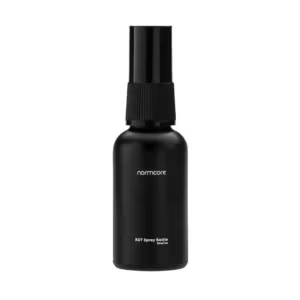
Tools to make it easier? Grab a dedicated RDT spray bottle (like the Normcore one, around $10-15) with an ultra-fine nozzle to avoid over-spraying. And always grind into a lidded container to contain the (now minimal) mess.
Benefits of RDT
Beyond the obvious static zap, RDT packs some surprising perks:
– Zero Retention, Zero Waste: Static cling can trap 0.5-2g of grounds in your grinder per dose. RDT cuts that to near nothing, yesterdays stale coffee degrades your taste, and it is saving you coffee and ensuring fresh, consistent shots every time.
– Cleaner Workflow: No more grounds exploding everywhere—your counters and grinder stay spotless, especially with electric burr grinders or washed-process coffees that charge up easily.
– Better Extraction? The Science Says Yes: A 2023 study in Matter journal tested RDT on naturals, washed, and decaf beans using a Mahlkönig EK43 grinder. They found that the water droplets alter particle size distribution (creating slightly more uniform fines) and reduce triboelectric charging (the static friction). This improves flow rates in espresso pucks, extracting more desirable flavors—think brighter acidity and sweeter notes—especially in drier, darker roasts or finer grinds. The effect is subtle but measurable, bumping extraction yields by 1-3% without changing your recipe.
Drawbacks and Caveats
RDT isn’t flawless—here’s where it can backfire:
– Rust Risk: Moisture + metal = potential corrosion in non-stainless burrs. Always check your grinder manual—brands like Fellow or Baratza are usually safe, but vintage handmills? Proceed with caution.
– Not Shop-Friendly: In busy cafes, the extra step slows you down during rush hour. It’s best for low-volume, single-dose workflows, not batch grinding.
– Overdo It and Regret It: Too much water leads to clumpy grounds or bacterial growth in storage. Less is *always* more—err on the side of dry.
Final Tips and When to Use It
Start experimenting with RDT if static is your nemesis: think high-end burr grinders, low-humidity environments, or single-dosing routines. If you’re new, watch a quick demo (James Hoffmann’s got a solid one). Ultimately, RDT’s a low-effort upgrade that turns grinding from a chore into a breeze, letting you focus on the joy of that perfect crema.